

With Grateful Hearts: Thank You for helping us live a tradition
As we look back on 2025, the very first thing we feel is gratitude — for you. It’s your friendly, smiling faces that make what we do so meaningful. We’ve had the joy of meeting your friends and families, watching annual traditions unfold, celebrating best-friend outings, welcoming new babies, and honouring loved ones we’ve had to say goodbye to. We’ve shared laughs, and yes, even a few tears. These moments are the heart of 40 Knots, and we are deeply thankful you choose to share them with us.
2025 gave us many reasons to celebrate. In February, we proudly launched our Knotty Ciders at the winery and took them on the road to major Vancouver events. The response was incredible, introducing our ciders to a new demographic of happy, traditional cider lovers — and earning Gold medals and 90+ scores alongside some of the country’s most respected producers.
From the vineyard, 2025 was nothing short of exceptional. Consistency best defines the growing season: steady heat units exceeding 1200 GDD, minimal rainfall paired with excellent soil moisture, and even veraison across most varietals. Compared to 2024, harvest was more uniform, and while yields were average, fruit quality was among the best we’ve seen in our 12 years of vineyard operations — beautifully balanced sugars, acidity, and flavour concentration.
There were pleasant surprises across the vineyard. Pinot Gris exceeded expectations for ripeness, while a slightly lower-yielding Chardonnay rewarded us with enhanced quality. Schonburger and Siegerrebe shone for the third consecutive year, and our three Pinot Noir clones hit their target yields with full ripeness and zero disease pressure. Aside from a brief period of wildfire smoke in surrounding regions, which we carefully managed through vigilant canopy work and monitoring, the vineyard remained healthy and resilient. Harvest came early, clean, and efficient — completed over just six pre-dawn days, preserving fruit integrity and freshness.
We marked the end of harvest with the launch of our first Vines & Tides Dinner, in collaboration with the BC Shellfish Growers Association. Celebrating our wines alongside the bounty of the ocean felt perfectly fitting for the Comox Peninsula, and we’re thrilled this will now become an annual tradition.
Beyond the vineyard, 2025 was full of life. We hosted the Canadian Culinary Team, welcomed beautiful couples celebrating their weddings, supported many non-profits, and saw Wine Wednesdays return with some big names in music — with even more exciting talent coming in 2026. We introduced enhancements to our wine clubs, hosted Georgia Straight Jazz and the Vancouver Island Symphony, celebrated Mother’s Day with our annual Hat Show, held markets, fundraisers, Christmas parties, and continued as the home of Comox Valley Rotary Club meetings.
We took 40 Knots on the road too — running bars at the Comox Valley Chamber of Commerce Awards, Canada Day in Lewis Park, and Ribfest. Along the way, we were honoured with numerous 90+ scores from renowned wine writers, and Gold medals across all our ciders.
Behind it all is our incredible crew. We watched team members head off to university, travel the world, and step into new chapters, while welcoming new faces to the family. What unites everyone here is simple: genuine joy when you walk through our doors.
On a personal note, this year included a granddaughter’s graduation, saying goodbye to a father, learning a little more about fishing, and beginning to plan what comes next. We’re grateful to our friends and family who continue to visit, support, and cheer us on.
So, what does 2026 hold? As the saying goes, “How do you make God laugh? Tell Him you have a plan.” We may not know exactly what’s ahead, but we do know this: we’re excited, we’re grateful, and we’re committed to making the very best of it — with you.
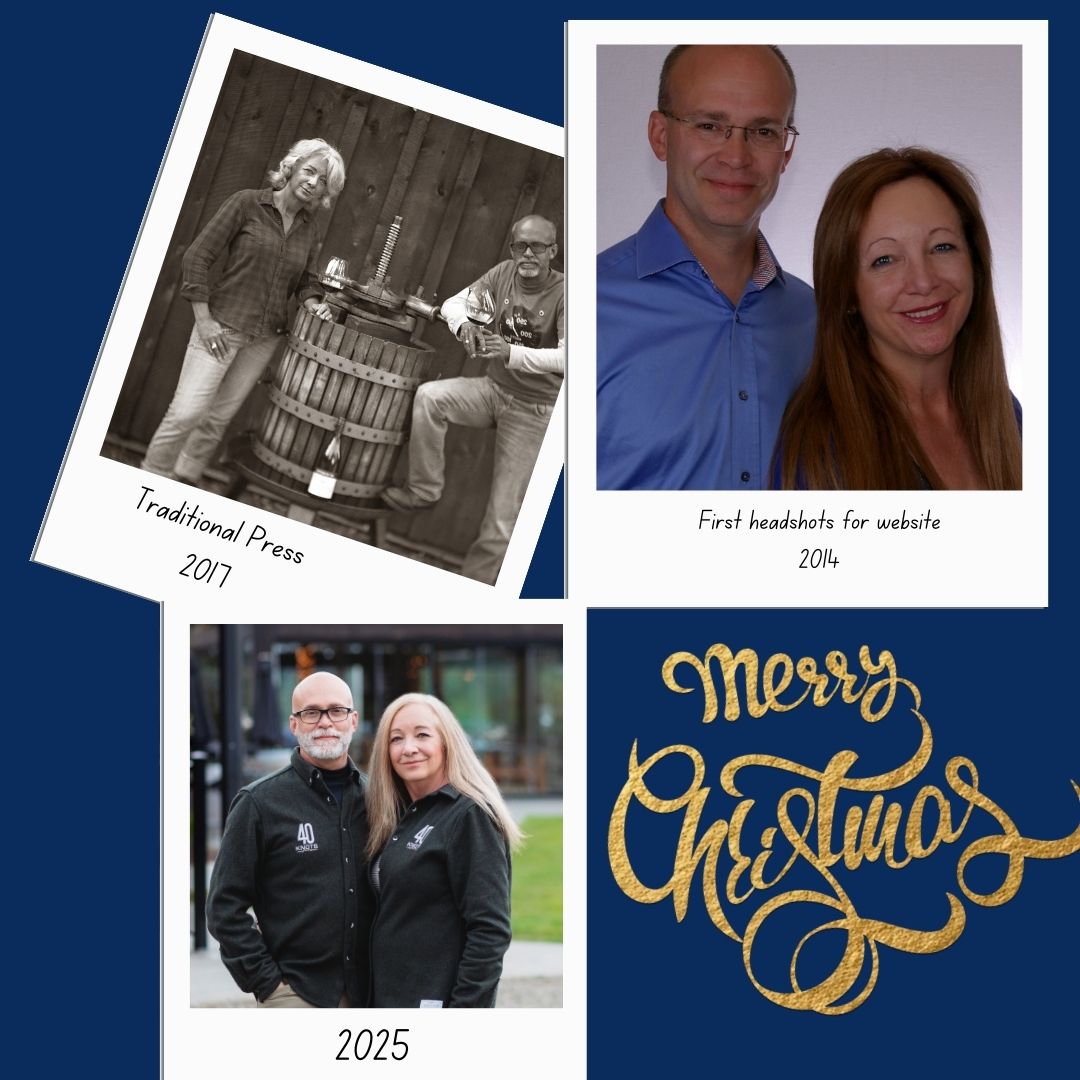
From Layne and I, thank you for being part of our story. We truly couldn’t do this without you, and we can’t wait to share what comes next.
In July of 2014, we embarked on the journey of 40 Knots with a simple intention: to return to our roots. Traditional farming, hands-on winemaking, family at the centre, and a deep respect for the land and community around us. Tradition has always mattered to us — it’s what grounds us, guides us, and reminds us why we started in the first place.
As we celebrate the Christmas season with our own family traditions, we’re reminded that traditions are living things. Some are passed down, some are shared, and sometimes we joyfully add a new one to the repertoire. We are especially intrigued by Feuerzangenbowle.
The 40 Weirdest Christmas Traditions Around the World
Catalonia, Spain – Children beat a smiling log called Caga Tió until it “poops” out presents.
Austria – Krampus, the horned demon, punishes naughty children with chains, sticks, or carries them off in a sack.
Norway – Hide your brooms on Christmas Eve to stop witches and evil spirits from stealing them.
Iceland – The Yule Cat eats anyone who hasn’t received new clothes for Christmas.
Sweden – The Tomte, a mischievous gnome, can play tricks or reward families who leave him porridge.
Venezuela – Streets close so people can roller-skate to early-morning church services.
Japan – Some regions hang “fake poop” ornaments for luck and fertility.
Norway – Julebukk: villagers dress in scary masks and go door-to-door demanding treats or performing pranks.
Sweden – The giant straw goat (Gävle Goat) is erected yearly; locals try to burn it down.
Finland – People dress as Santa Claus to surprise strangers with gifts in a reverse haunted-house style.
Germany – Hanging chains, sticks, and frightening masks outside homes to scare away evil spirits.
Ukraine – Trees decorated with spiderweb ornaments to bring good luck.
South Africa – Fried caterpillars are considered a delicacy.
Italy (Sicily) – Families stage “witch invasions” with scary costumes before Santa arrives.
Slovakia & Czech Republic – Throwing shoes over your shoulder; the direction determines marriage fortune.
Philippines – Massive parols (star-shaped lanterns) light up towns; some require cranes to lift.
Poland – Churches host live animals during Christmas masses, including roaming sheep and goats.
Romania – Men dress as terrifying monsters and chase villagers to drive out evil before Christmas.
France (Provence) – Families hide naughty clay figurines (santons) in the nativity set for kids to find.
Mexico – Las Posadas reenacts Mary and Joseph’s search for shelter, often with playful food fights.
Estonia – Some families perform elaborate snow rituals and mask parades to welcome Christmas.
Lithuania – Some celebrate with pig sacrifices as a symbol of prosperity and luck.
Germany (Oberammergau) – The “Perchten” parade features men dressed in terrifying masks, rattling chains through towns.
Belarus – People dress as devils and chase “sinners” to symbolize purification and good luck.
Spain (Basque Country) – Olentzero, a coal-eating gnome, delivers gifts; sometimes he’s drunk and a little terrifying.
Iceland – 13 Yule Lads, pranksters who leave gifts—or rotten potatoes for misbehaving children—visit in the 13 days before Christmas.
Germany (Bavaria) – Feuerzangenbowle: a flaming rum-soaked sugarloaf is set on fire over mulled wine for luck.
Slovenia – People dress as “Kresniki” (fire-wielding spirits) to chase away evil.
Norway – Nisse leave little threats if you forget to leave porridge—sometimes knocking on doors with sticks.
Ukraine – Some rural areas wear animal masks during caroling to scare off bad spirits.
Italy (Naples) – Nativity scenes include bizarre characters like witches, skeletons, and criminals.
Poland – In some regions, people whip each other with branches for health and good fortune.
Croatia – Some villages perform the “Badnjak” ritual: burning an oak tree branch to bring luck.
Spain (Catalonia, again) – People put small figurines of poo (caganers) in nativity scenes for fertility and prosperity.
Norway – Julebukking: adults dress as ghosts and goblins to scare neighbors and get treats.
Belgium – Kerstman (Santa’s dark cousin) and his helpers sometimes punish naughty children with bundles of sticks.
Switzerland – In some villages, men dress as scary devils and parade through streets making terrifying noises.
Austria (Styria) – People wear horned masks and carry whips to scare away winter spirits.
Latvia – A ritual called “Ziemassvētki” includes dressing as animals to chase off evil forces.
Italy (Sardinia) – Some towns have live wild goat parades, believed to cleanse the village and bring luck